

Have you ever felt completely captivated by the mesmerizing sounds of Lindsey Stirling’s “Song of the Caged Bird”? You’re not alone.
This enchanting piece blends classical violin with modern beats, creating a unique sound that’s both haunting and uplifting. But how can you learn to play it yourself? Whether you’re a seasoned musician or just starting out, this guide will take you through the steps to master this beautiful song.
Imagine the thrill of playing those soulful notes with precision and emotion. With a bit of guidance, you can bring this stunning composition to life. Ready to unlock your musical potential? Let’s dive in and discover how you can play “Song of the Caged Bird” with confidence and flair.
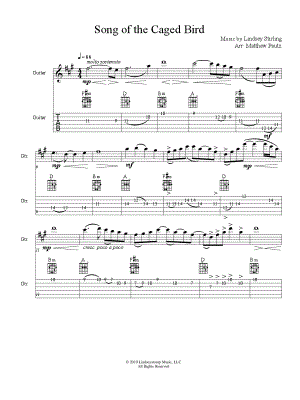
Credit: www.musicnotes.com
Getting Started With Song Of The Caged Bird
Starting to play “Song of the Caged Bird” by Lindsey Stirling is both exciting and challenging. This piece combines classical violin techniques with modern electronic rhythms, so getting your setup right and understanding the style are key to nailing the performance. Before diving into the notes, preparing your equipment and mastering some basic techniques will make your practice smoother and more rewarding.
Essential Equipment And Setup
First, ensure your violin is in good condition and properly tuned. Lindsey often uses an electric violin for her performances, which helps capture the unique sound and effects she creates. If you don’t have an electric violin, a high-quality acoustic violin with a good microphone or pickup can work as well.
Consider your practice environment too. A quiet space with minimal distractions helps you focus on the intricate rhythms and bowing patterns. Using a metronome will keep your timing tight, especially since the song features syncopated beats that can throw beginners off.
- Electric violin or acoustic violin with pickup
- Quality bow and rosin for smooth play
- Tuner and metronome
- Quiet, comfortable practice space
- Optional: headphones or speakers to play along with backing tracks
Basic Techniques For Lindsey Stirling’s Style
Lindsey’s style blends classical violin with hip-hop, dubstep, and pop. This means you’ll need to focus on clean bow control and fast finger movements. Start by practicing short phrases slowly to build accuracy.
Pay special attention to staccato bowing and rhythmic accents. These give the song its punchy feel. Also, work on vibrato and slides to add emotional depth, which Lindsey uses to tell the story through her playing.
Have you tried combining different bowing styles before? Experiment with alternating between legato and spiccato to capture the song’s dynamic shifts. These subtle changes keep the listener engaged and bring the piece to life.
Mastering The Main Melody
Mastering the main melody of “Song of the Caged Bird” by Lindsey Stirling brings the piece to life. The melody carries the emotion and flow that defines the song. Playing it cleanly and with feeling makes a big difference. Focus on small parts first to build confidence and accuracy.
Breaking Down The Intro
The intro sets the mood with a soft, clear sound. Start by learning the notes slowly. Listen carefully to Lindsey’s timing and phrasing. Use a metronome to keep steady rhythm. Play one phrase at a time until it feels natural. Repeating short sections helps memory and muscle control.
Playing The Verse And Chorus
The verse and chorus bring energy and movement. Notice the subtle changes in speed and volume. Practice these parts separately before combining them. Use finger placement that feels comfortable and allows smooth transitions. Try to keep the bowing steady to maintain a warm tone. Play along with the recording to match dynamics and emotion.
Common Challenges And Tips
- Maintaining steady bow control can be difficult. Practice long, slow bows to improve.
- Shifting between notes smoothly takes time. Use slow exercises focusing on finger movement.
- Keeping consistent intonation is key. Use a tuner or play with the recording to check pitch.
- Memory slips happen often. Break the melody into small parts and review them regularly.
- Stay relaxed to avoid tension. Take short breaks during practice sessions.
Adding Expression And Style
Adding expression and style to “Song of the Caged Bird” brings the piece to life. It turns notes into emotions. These touches make your performance memorable and unique. Focus on how you play, not just what you play. Small changes in volume, speed, and technique create a personal touch.
Incorporating Dynamics And Phrasing
Dynamics are the changes in loudness. Use soft and loud sounds to show feelings. Start some parts quietly, then grow louder. Let the music breathe. Pause slightly between phrases to add meaning. Think of each phrase like a sentence with its own emotion.
Using Bowing Techniques
Bowing affects the sound quality. Try smooth, long bows for calm sections. Use short, sharp bows for excitement or tension. Change bow speed and pressure for different tones. Experiment with legato to connect notes gently. Add staccato for crisp, quick notes. These techniques give life and character.
Practice Routines For Improvement
- Play slowly to control dynamics and phrasing well.
- Record yourself to hear your expression clearly.
- Focus on difficult parts with special bowing patterns.
- Repeat sections until transitions feel natural.
- Use a metronome to keep steady timing.
- Practice daily in short sessions for steady progress.

Credit: www.youtube.com

Credit: www.youtube.com
Frequently Asked Questions
How Do I Start Learning Song Of The Caged Bird?
Begin by listening to the original track to grasp its melody. Use slow tutorials to learn the violin parts step-by-step. Focus on mastering small sections before combining them.
What Violin Techniques Are Used In This Song?
The song features pizzicato, legato, and fast bowing techniques. These require practice for smooth transitions and dynamic expression. Pay special attention to bow control and finger placement.
Can Beginners Play Song Of The Caged Bird?
Yes, beginners can play simplified versions. Start with slow practice and basic finger positions. Gradually increase speed as you gain confidence and skill.
Where Can I Find Sheet Music For This Song?
Sheet music is available on official Lindsey Stirling websites and music stores. Some free versions exist online but check for accuracy. Purchasing official sheets supports the artist.
Conclusion
Playing “Song of the Caged Bird” by Lindsey Stirling takes time and practice. Start slow and focus on each part carefully. Watch videos or listen to the song often to understand its rhythm. Keep your bow steady and your fingers light on the strings.
Enjoy every step and celebrate small progress. Soon, you will play this beautiful piece with confidence. Remember, patience and practice make the difference. Keep playing and have fun with Lindsey Stirling’s music.